


Proper nutrient management involves using crop nutrients efficiently to enhance productivity while protecting the environment. The main principle of nutrient management is balancing soil nutrient supply with the crop requirements. When applied in the right amounts and at the appropriate time, nutrients help achieve optimum crop yields. Inadequate or improper nutrient management has been identified as one of the factors limiting rice productivity in several major rice growing regions.
Rice is an indispensable commodity to the Bhutanese food system and livelihood. The entire Bhutanese population depends on rice, either as producers or consumers and it remains the most preferred staple food across the country. Considering its importance in ensuring food security, one of the key performance indicators (KPI) of the Department of Agriculture (DoA) is to increase rice productivity. In line with this KPI, the National Soil Services Centre (NSSC) in collaboration with the Samtse Dzongkhag Agriculture Sector initiated large-scale proper nutrient management demonstration to enhance rice yields in 73 acres of rice fields at Sangngagchoeling Gewog, Samtse Dzongkhag.
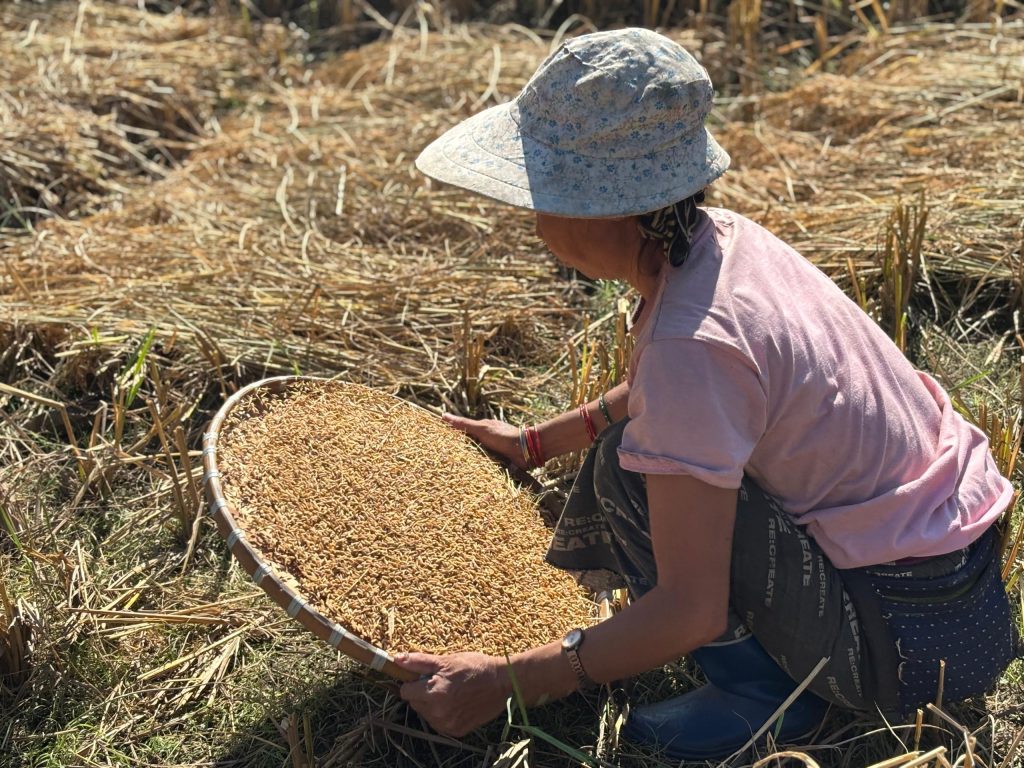
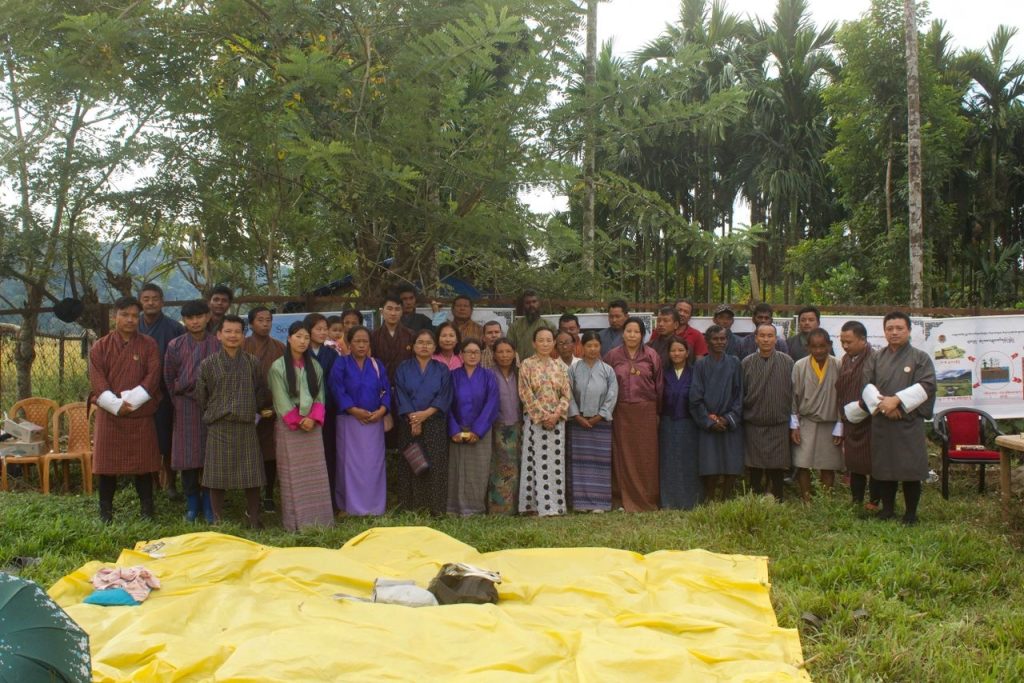
Farmers were briefed on the purpose of such practices, its benefits, and the planned implementation modality. Soil sampling and testing were conducted prior to rice cultivation, and nutrient recommendations were provided based on the test results. NSSC officials conducted follow-up field visits during critical crop growth stages, monitored crop performance and provided guidance on nutrient management. The field visits revealed visibly greener and healthier rice plants under proper nutrient management fields compared to the fields under farmers’ traditional practices (control field). Farmers also reported better rice growth compared to the previous season. At the end of the crop season, rice fields were randomly selected to organize a field day to evaluate the crop yield. Local leaders, farmers, and Dzongkhag Agriculture Officials took part in the event. First, the participants were sensitized on soil fertility management technologies, plant nutrition, and the role of proper nutrient management in improving crop productivity and economic returns. Following this, the participants were taken to the selected fields for crop cut, harvesting rice from 3 x 2 meters to estimate crop yield per acre. 30 crop cuts were performed from 10 fields and the results showed consistently higher rice yields with proper nutrient management. The control field yielded 1.43 t/acre while fields under proper nutrient management yielded 1.56 to 2.38 t/acre, equivalent to 9% to 66% increase in the rice yield. These results demonstrate that proper nutrient management is one of the key parameters for improving rice yield. This is a preliminary report and a comprehensive report will be submitted after collecting all data from the field.
4,729 total views, 3 views today